
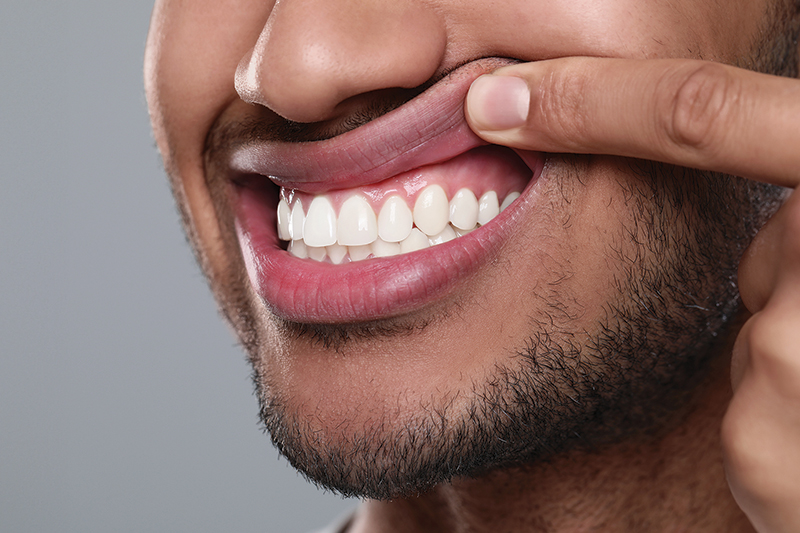
Scroll through social media, and you’ll see bold claims about dental health: “Reverse cavities naturally.” “Regrow enamel.” “Heal your teeth.”
It sounds almost too good to be true – and in many ways, it is. The idea that a fully formed cavity can simply disappear overnight isn’t realistic. But the conversation around regenerative dentistry does highlight something important: our teeth and gums are part of a living system, deeply connected to the rest of the body.
For dentists who practice biological or integrative dentistry, the question isn’t just “How do we fix the tooth?” It’s why the problem occurred in the first place. And once we understand that, can the body be supported in repairing itself?
Looking Beyond the Tooth
Traditional dentistry often focuses on the immediate problem: a cavity is drilled and filled, gum disease is treated, or a damaged tooth is restored. These treatments are essential and often necessary.
But regenerative dentistry asks a broader question: what conditions allowed the problem to develop?
Tooth decay, for example, rarely has a single cause. Instead, it is usually the result of several interacting factors. Nutrition is one of the most important. Vitamins and minerals – especially calcium, phosphorus, and vitamin D – play a crucial role in maintaining strong enamel and bone. Vitamin D, in particular, helps the body absorb minerals that support teeth and skeletal health. If vitamin D levels are low, the body may struggle to properly use the minerals that protect teeth.
Digestion also plays a role. Even if a person consumes a healthy diet, the body must still absorb those nutrients efficiently. Problems within the digestive system – such as microbial imbalance in the gut, often called dysbiosis – can interfere with the body’s ability to process and utilize essential minerals. The result may be subtle at first, but over time it can affect the resilience of teeth and gums.
The Mouth–Body Connection
Another surprising factor influencing dental health is how we breathe. People who primarily breathe through their mouths often experience a drier oral environment. Saliva plays an important protective role in the mouth – it helps neutralize acids, wash away food particles, and support a balanced microbial environment.
When mouth breathing reduces saliva flow, the mouth’s pH can shift toward acidity. This creates conditions where certain bacteria associated with cavities thrive. This is why some dentists now use salivary testing to better understand the oral environment. Saliva can reveal information about bacterial balance, acidity levels, and other factors that influence dental health.
In other words, brushing and flossing are essential – but they are only part of a much larger picture.
Teeth Are Living Structures
Most people think of teeth as lifeless, almost like small stones embedded in the jaw. In reality, a tooth is a living biological structure. Inside each tooth is a soft tissue known as the pulp, which contains blood vessels, nerves, and connective tissue. Tiny microscopic channels within the tooth, called dentinal tubules, connect the tooth’s outer structures to its inner core. Because of this internal system, teeth can respond to their environment.
In the earliest stages of decay, areas of demineralization – where minerals have been lost from the enamel – can sometimes recover through a process called remineralization. When the oral environment is favorable and the body has access to the right nutrients, minerals may be redeposited into weakened areas of enamel.
Some emerging research even suggests that teeth may have their own protective mechanisms. Fluid movement within microscopic tubules can create hydrostatic pressure that pushes outward from the inside of the tooth. This process may help push toxins and bacteria away from the tooth’s inner structures.
While this doesn’t mean advanced cavities will simply heal themselves, it does suggest that teeth are far more dynamic than previously believed.
The Healing Potential of Gum Tissue
The gums, or gingiva, are among the most resilient tissues in the human body. When the sources of irritation – such as bacterial plaque, inflammation, or microbial imbalance – are removed, gum tissue often responds quickly. Reduce inflammation and restore healthy conditions, and the gums can frequently repair themselves.
This is why modern approaches to periodontal health focus not only on cleaning infected areas but also on addressing the biological environment that allows disease to persist. When the body’s immune system and microbial balance are supported, healing becomes far more likely.
The Hidden Foundation: Jawbone Health
Beneath the teeth and gums lies the jawbone, the structural foundation that holds everything in place. Until recently, much of the jawbone’s internal structure was difficult to evaluate using traditional dental X-rays. Today, advanced imaging technology – particularly three-dimensional cone beam CT scans – allows dentists to examine bone structures with far greater detail.
These scans can reveal areas of abnormal bone density. Some regions may appear hypodense, meaning the bone is less dense than expected. Others may appear hyperdense, which can indicate altered or compromised bone structure.
These changes are often invisible on standard two-dimensional X-rays. With more detailed imaging, dentists can identify areas that may benefit from regenerative approaches aimed at supporting bone repair.
Supporting the Body’s Repair Systems
One technique used in regenerative procedures involves materials derived from the patient’s own blood. These concentrates – often rich in platelets and natural growth factors – contain signaling molecules that help stimulate healing.
When applied to surgical or damaged areas, these biologically active substances can help support the body’s natural repair processes. The goal is not to force healing but to enhance the body’s own regenerative abilities. It’s an approach rooted in a simple idea: the body already knows how to heal – it sometimes just needs the right conditions.
A Body Under Pressure
Modern life, however, can challenge those healing processes. Our bodies are exposed to environmental chemicals, processed foods, and stressors that previous generations rarely encountered. The body’s detoxification systems – often described as its natural “filters” – work constantly to process these exposures.
When those systems are overwhelmed, inflammation and imbalance can occur throughout the body. The mouth, which is closely connected to the immune system and digestive system, may reflect those changes. In this way, dental health can sometimes serve as an early signal of broader health issues.
The Future of Regenerative Dentistry
Regenerative dentistry is still evolving, but its influence is growing. Advances in imaging, biomaterials, and biological therapies are expanding what dentists can see – and what they can help the body repair.
Researchers are exploring technologies that could one day encourage the regeneration of dentin, enamel-like materials, and even entire tooth structures. Stem-cell research and bioengineered tissues are also being studied as potential tools for the future of oral health.
While many of these developments are still in early stages, they reflect a larger shift in dentistry. The focus is gradually shifting from simply replacing damaged tissues to helping the body restore them whenever possible. Teeth, gums, and bone are not just mechanical parts of the body. They are living tissues influenced by nutrition, breathing, metabolism, and the complex ecosystems of bacteria that live within us.
Understanding that connection may be one of the most important steps toward better dental health. Because the future of dentistry may not be about fighting the body’s limitations – it may be about working with the body’s remarkable capacity to heal.
Dr. Josephine Perez, DMD, has been practicing dentistry for almost 35 years. She is a graduate of Tufts University School of Dentistry in Boston and interned at New Orleans Coast Guard/Navy Base. Her holistic approach to dentistry encompasses each person’s unique and entire (or whole—holistic) state of physical and emotional well-being. The ability to maintain health through preventive measures and treatments of oral disease is her priority. Dr. Perez focuses on the underlying condition rather than only treating the symptoms. She tests for biocompatibility to find pathways to reduce inflammation and apply biocompatible and biomimetic materials, supplements, and essential oils to restore and strengthen the oral cavity and, ultimately, the whole body. After decades of restoring and transforming smiles, Dr. Perez has integrated total wellness into her oral health enhancement practice – a revolutionary style of dentistry.
Visit Pure Dental in Naples at 4444 Tamiami Trail N, Ste. 6–7, call 239.692.9623 or go to: www.puredentalnaples.com.